From the Boardroom Armor to the Art of Presence
For decades, the term “Power Dressing” carried a very specific, almost aggressive image. It was born in the 1980s—an era of massive shoulder pads, sharp pinstripes, and a “dress for war” mentality. In that era, power was about imitation; women dressed like men to be taken seriously, and men wore stiff, armored suits to project dominance. Power was something you projected outward to intimidate.
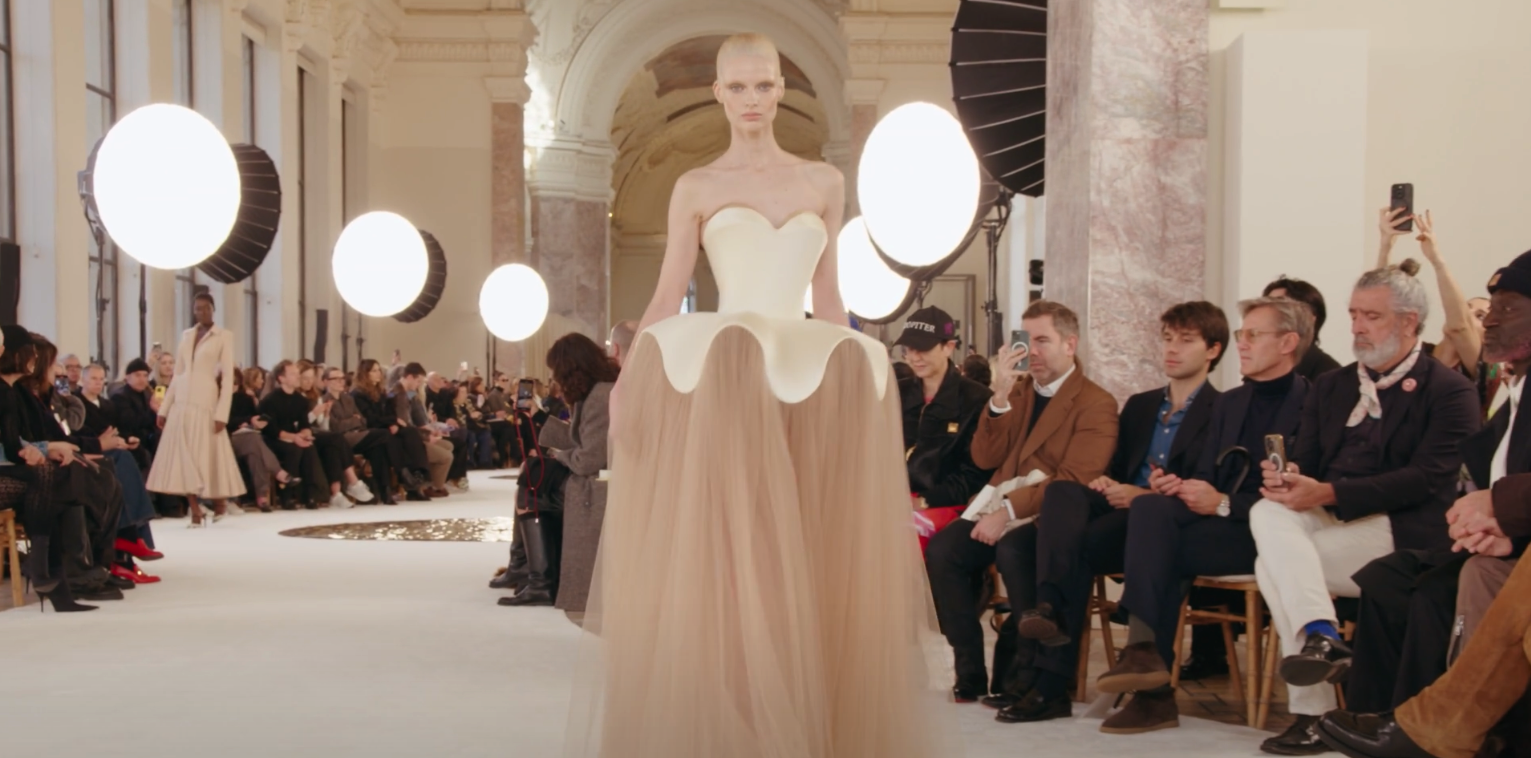
However, as we navigate the complexities of the mid-2020s, the definition of power has undergone a radical transformation. True power is no longer about noise, dominance, or physical imposition. Today, Power is Redefined with Grace. It is no longer an armor we wear to hide our insecurities; it is a canvas we use to display our composure.
I. The Death of the Armor
The old way of power dressing was defensive. We wore stiff fabrics and sharp angles to create a barrier between ourselves and the world. It was a way of saying, “Do not touch me; I am in control.” Modern power dressing is the opposite. It is invitational. Graceful power understands that true influence comes from connection, not isolation. The modern professional replaces the “stiff” with the “structured.” We see a shift toward softer silhouettes—fluid silks, high-quality knits, and relaxed tailoring. These garments don’t scream “Power,” they whisper “Capability.” When you are no longer hiding behind a costume of authority, you allow your natural competence to take center stage.
II. The Architecture of Grace
Grace is often misunderstood as weakness or passivity. In reality, grace is controlled strength. In the world of style, grace is the “quiet” in the room.
-
Fluidity and Movement: A graceful garment is one that moves with the wearer, not against them. Whether it’s a perfectly draped trench coat or a pair of wide-leg wool trousers, the way the fabric flows as you walk communicates a sense of ease. And ease is the ultimate sign of power. Only those who are truly in control of their environment can afford to be “at ease.”
-
The Palette of Composure: Redefined power dressing moves away from the harsh “High Contrast” (stark black and white) and toward “Nuanced Neutrals.” Earthy tones, soft charcoals, and “sand” palettes suggest a person who is grounded. These colors don’t demand attention; they command it through their calm consistency.
III. The Psychology of the “Soft Power”
There is a psychological shift when we move from “Aggressive Power” to “Graceful Power.” This is often called Soft Power. In diplomacy, soft power is the ability to attract and co-opt rather than coerce. In fashion, it is exactly the same.
When you dress with grace, you lower the “threat level” in a room, which actually makes people more likely to listen to you. You become the “Calm Center” of the storm. In a high-stakes meeting, the person wearing the most comfortable, well-fitted, and graceful outfit is often the one who makes the final decision. Why? Because their clothes signal that they are not stressed. They are not fighting their collar; they are focusing on the problem.
IV. Materiality__The Truth in the Touch
In the new era of power dressing, Material is the Message. You cannot achieve grace with cheap, synthetic fabrics. Grace requires the honesty of nature.
-
The Integrity of Fabric: Pure wool, heavy linen, organic cotton, and raw silk. these materials have a “weight” to them. They hang differently. They breathe. When you wear natural fibers, you are signaling a respect for quality and craftsmanship.
-
The Sensory Experience: Power dressing redefined is as much for the wearer as it is for the observer. When you feel the softness of cashmere or the cool touch of silk, your nervous system relaxes. A relaxed person is a confident person. A confident person is a powerful person.
V. The “Edit” as an Act of Authority
One of the most powerful things a person can do is to say “No.” In style, this means the Power of the Edit. The old power dressing was about “more”—more gold, more padding, more accessories. Graceful power is about “less.”
-
One Focal Point: A single, meaningful piece of jewelry—perhaps a vintage watch or a family heirloom—carries more power than a dozen trendy pieces.
-
The Luxury of Space: Allowing your outfit to have “breathing room” (negative space) shows that you don’t feel the need to fill every gap with noise. It shows a level of self-assurance that is rare and highly respected.
VI. Presence__The Final Accessory
You can have the most graceful wardrobe in the world, but without Presence, it is just laundry. Presence is the way you inhabit your clothes.
-
The Graceful Walk: Power is not found in a frantic pace. It is found in a measured, intentional gait.
-
The Stillness of Hands: Graceful individuals don’t fidget. Their hands are still, their gestures are purposeful.
-
The Unhurried Speech: When your clothing is refined and your mind is clear, your speech becomes unhurried. You don’t fear silence in a conversation. You “own” the silence.
VII. Case Study__The New Icons
If we look at modern leaders—from tech CEOs to cultural icons—the “Power Suit” has changed. We see world leaders in “unstructured” blazers and thinkers in high-quality minimalist knitwear. They have redefined power as Authenticity. They are no longer playing a role; they are being themselves, refined to the highest degree.
This is the goal of “Power Dressing, Redefined with Grace.” It is to reach a point where your clothes are so perfectly aligned with your internal self that they become invisible. People don’t say, “That is a powerful suit.” They say, “That is a powerful person.”
VIII. Conclusion__The Eternal Sophisticate
Power Dressing 1.0 was about the Office. Power Dressing, Redefined with Grace is about the Individual.
We are living in a time where the “rules” of what is professional are disappearing. In this vacuum, the only rule that remains is Grace. By choosing quality over hype, comfort over armor, and presence over performance, you tap into a form of power that is ageless.